The Tragedy of Advisors

We often hope that our efforts will lead to rewards, believing that free opportunities exist to help us achieve wealth. I propose the use of a “literary truth razor” to discern financial advisors’ effectiveness. If an advisor’s investment advice is not markedly superior to the general life advice found in works of fiction, then such an advisor should be relieved of his duties.
I. Great Expectations and Unfulfilled Returns
Charles Dickens once wrote about Pip, an orphan who aspired to become a gentleman by learning a trade. In “Great Expectations,” Pip achieves his dreams, though Dickens originally envisioned a different outcome. Originally, Dickens wrote that Mr. Pip remains single and briefly encounters Estella, the love of his life and the widow of another man, in London. This alternate ending shows the gap between expectations and reality, introducing the sunk cost fallacy. This fallacy leads people to make decisions based on past investments rather than assessing current and future benefits. In investing, if actual returns fall short of expectations, it’s wise to cut losses.

II. Irrational Hope and Its Pitfalls
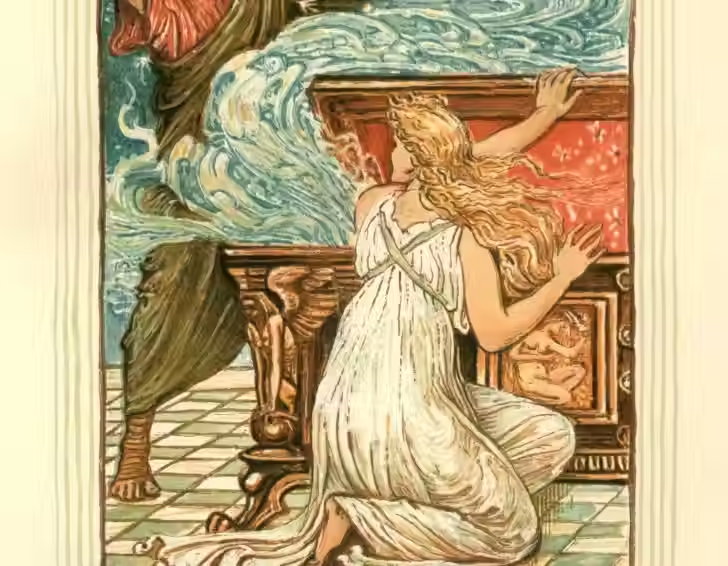
Great expectations and hope are deeply ingrained in our minds, but their risk and reward balance has puzzled us since the Pandora’s box myth. Pandora, instructed not to open a box but succumbing to curiosity, released miseries into the world, leaving only hope inside. While hope has a positive impact, excessive hope can lead to unrealistic expectations or complacency (Song Wang et al. 2020). Hope and great expectations can blind us to the sunk cost phenomenon and should be used cautiously in risky ventures.

Comments